22nd January 2026 by Lesley Stephen
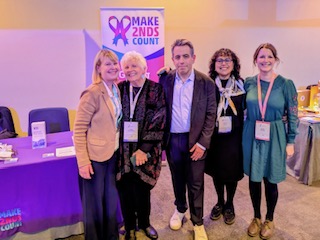
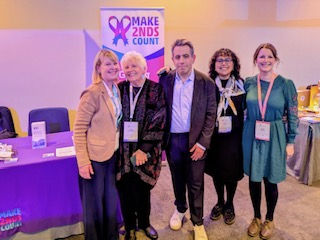
Conferences like the UK Interdisciplinary Breast Symposium (UKIBCS) play a vital role in shaping future breast cancer research. They are one of the few spaces where clinicians, researchers, nurses, and patients come together to share learning and explore how the latest research can translate into better outcomes and experiences for those living with breast cancer today and in the future.
For Make 2nds Count, being present at UKIBCS is important. As a charity dedicated to improving the quality of life for people living with secondary breast cancer, we have a responsibility to ensure that patient voices are heard in clinical and research settings. Contributing to conferences allows us to bring real-world patient experience directly into professional dialogue, while also building connections to help guide our work.
For the secondary breast cancer community, events like UKIBCS matter because they influence what research questions are asked and help identify gaps - whether in treatment options, access, equity or support.
Lesley, our Patient Trustee, offers a personal perspective of the event.
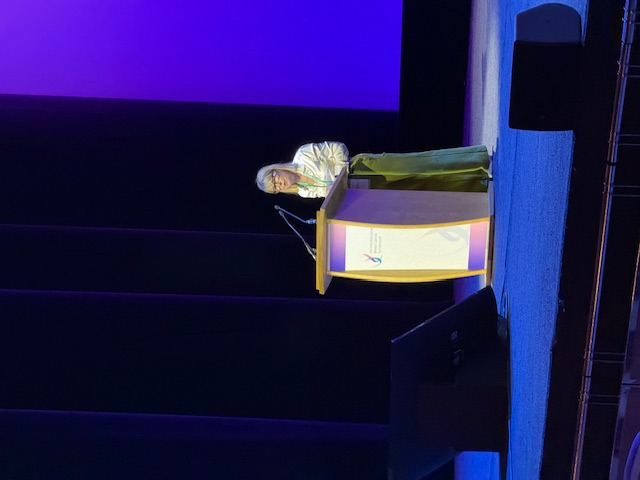
"This week I presented at the UK Interdisciplinary Breast Symposium (UKIBCS). It’s a huge breast cancer conference, held every two years in January in Birmingham. This year we had almost 700 people attending from all disciplines including oncologists, surgeons, pathologists, scientists, radiologists, nurses, medical students, pHD students, researchers and of course patients!
The UKIBCS was established to provide anyone with an active interest in breast cancer, a
chance to hear about and discuss the latest advances . And it’s ‘interdisciplinary’ because if
we want to real change, we need to collaborate amongst all these different disciples. I’ve
been on the organising committee for 4 years, so this was my second event.
This year almost 700 people registered to attend the event in person – most were health
care professionals of one sort or another, but thanks to Breast Cancer Now we were able to
offer bursaries to 35 patients with early or metastatic breast cancer.
The vast majority of sessions ran in parallel, under a particular theme. The themes were
wide ranging and many of the talks were complex and a bit heavy on the science. To give
you an idea, there were presentations on Genomic Germline Testing, Tumour Immunology
and Immunotherapy, Tailoring Axillary Surgery, Density Based Screening and many more.
There were 99 different presentations in the 2 days of the event!
However there were also ‘easier’ sessions on lifestyle interventions for patients, use of AI,
the use of exercise, cancer inequities, remote consultations and updates on dozens of trials,
many aiming to de-escalate treatments.
It’s impossible to go to all the sessions even if you wanted to, because they were run in
parallel in up to 11 different halls. But it is still a fairly exhausting and demanding schedule.
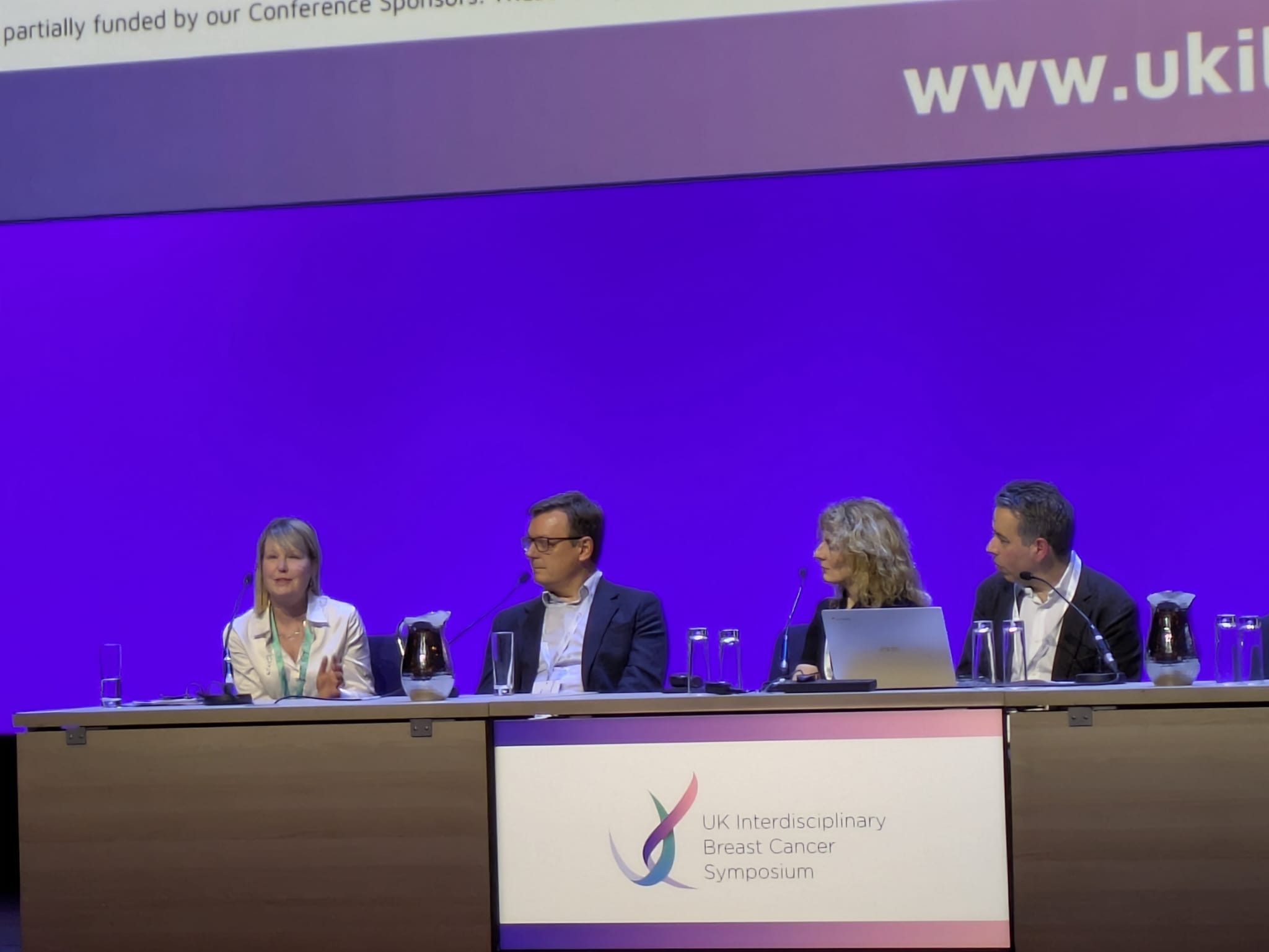
On the last day I co-chaired a session with Professor Carlo Palmieri titled ‘Progress in
supporting patients with metastatic breast cancer’. Carlo and I jointly presented data and
feedback on our 2024 and 2025 Patient Summits, and it was a great opportunity to shout
about these unique events to the medical community. We then had presentations on
Management of oligometastases, and Local therapy of brain metastases from other
oncologists, both big issues for patients which we need more research for.
One negative issue hung over the whole event however. Patients were banned from
entering the main exhibition stand because of very strict Association of British
Pharmaceutical Industry (ABPI) rules. The rules are designed is prevent the illegal
promotion of prescription-only medicines (POMs) to the public, but in reality it meant that
patients had to eat and meet in a different section of the main hall, and it felt like
segregation for us.
Despite that I had a great, if exhausting time. The highlights for me were meeting up with
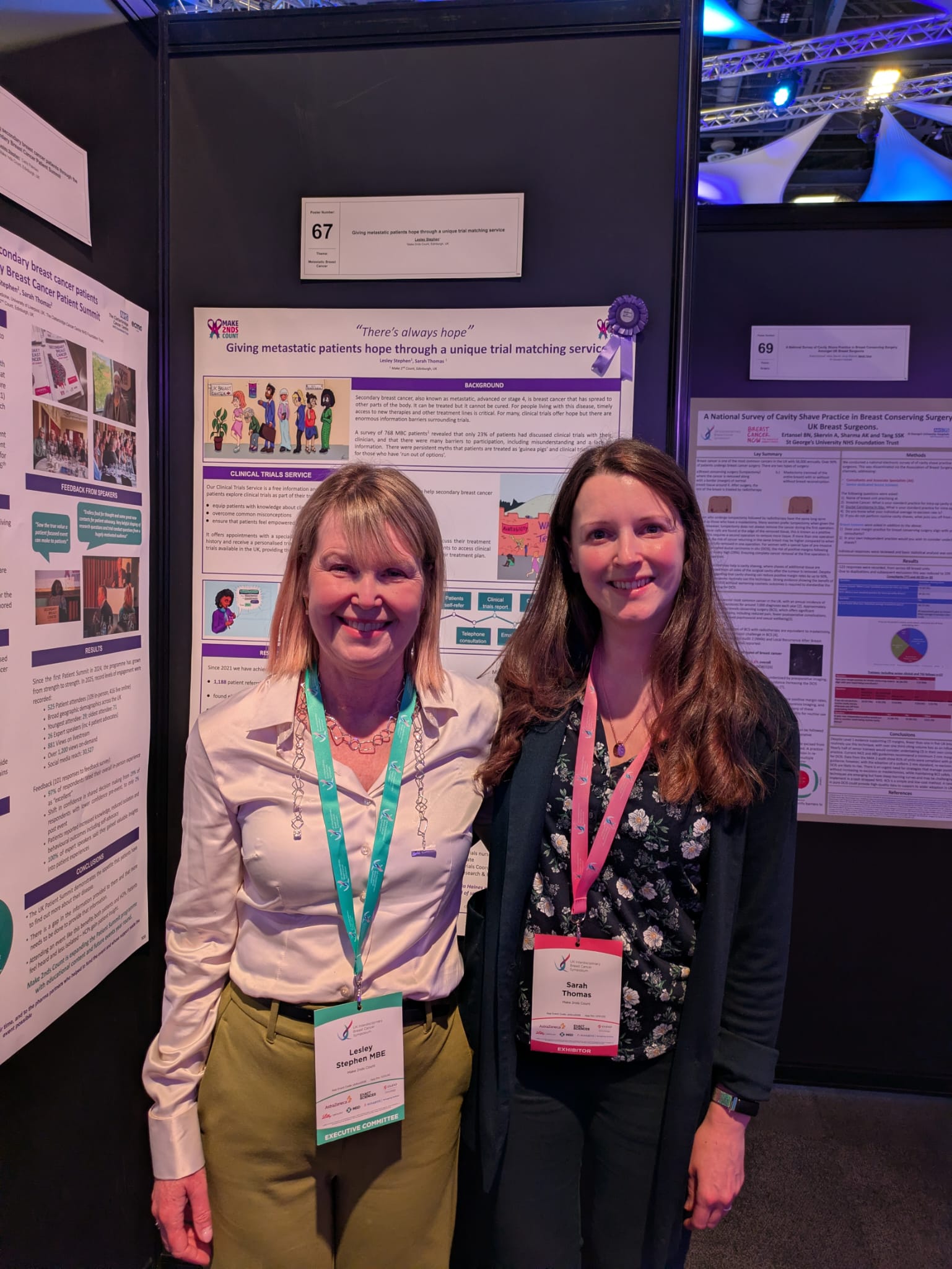
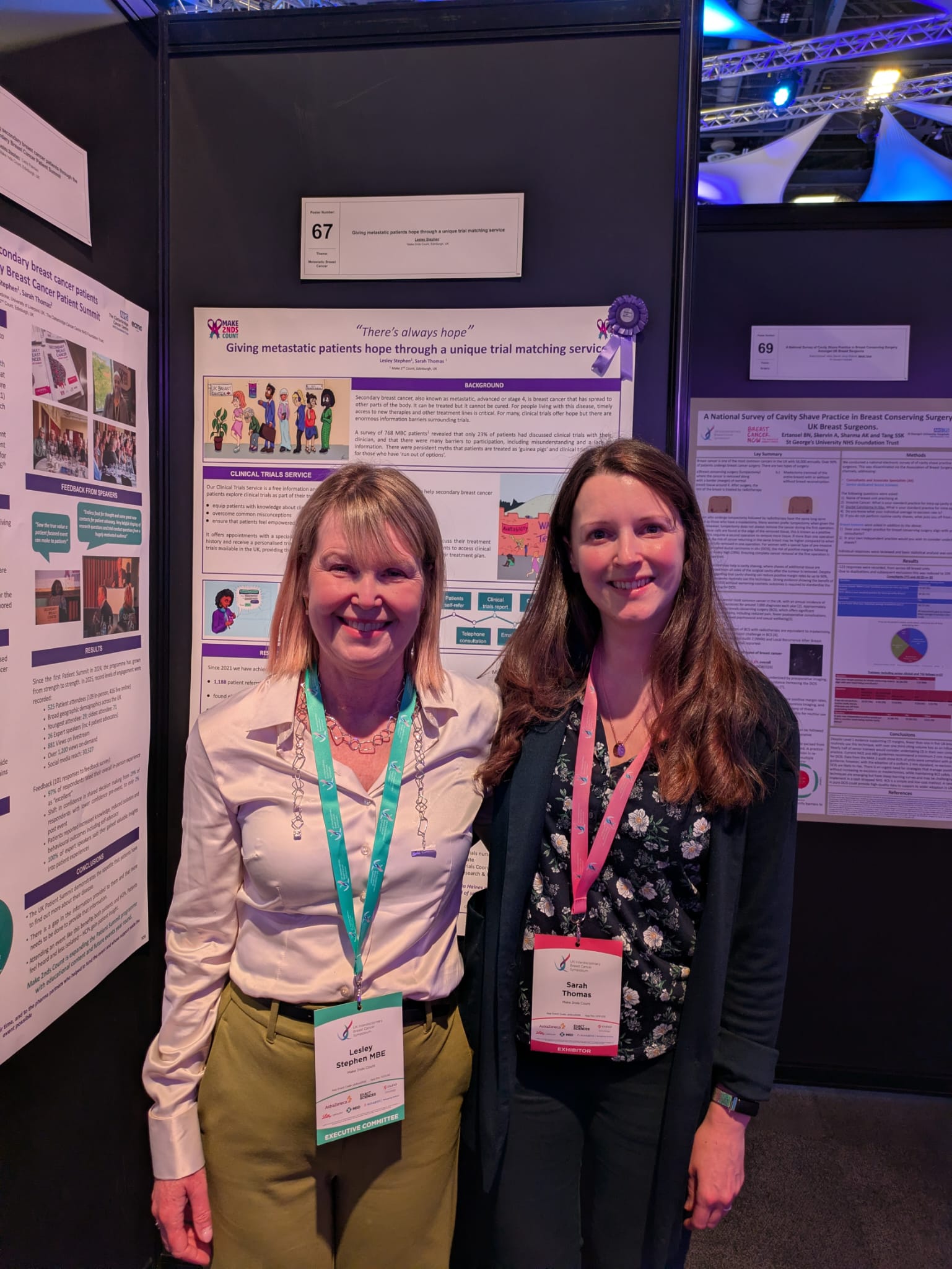
patient advocates and clinicians that I know, making new connections, seeing the dedication, commitment and innovation of the many professionals that spoke, and coming second in the Best Poster Prize!"

 Donate